
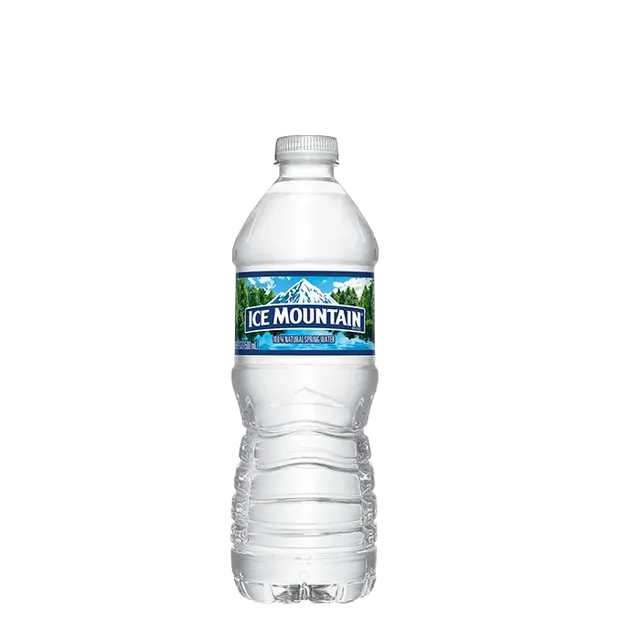
Ice Mountain Spring Water Plastic Bottle
by Ice Mountain
Ranked #240 of 680 still waters.
- Lab Tested
- Yes
- Contaminants
- 13
- Minerals
- 6
- Microplastics
- High
- pH
- 7.2
- TDS
- 191 ppm
- Fluoride
- 0.2 mg/L
- PFAS Tested
- Yes
About
Ice Mountain Spring Water is a natural bottled water sourced from protected springs. It provides hydration and is rich in essential minerals, promoting overall health. However, improper storage can lead to microplastic contamination and leaching of chemicals from plastic bottles.
Score breakdown
How this water earned its 59/100.
- Lab report indexed · Indexed45/45
- Contaminants · 13 Flagged0/50
- Water source · Spring25/25
- Mineral preservation · No Mineral Stripping17/17
- Packaging material · Plastic2/22
- Cap material · Plastic Screw7/7
- PFAS testing · Tested5/5
Lab reports
Independent testing data backing this product's score.
Filtration & treatment
Contaminants
Bromide
0.0195 mg/LToxicity from ingestion or chronic exposure, potential neurotoxicity, interference with iodine uptake affecting thyroid function, possible contamination with brominated compounds
· Health guideline: 100
Sulfate
18.7 mg/LSkin irritation, eye irritation, potential to disrupt skin barrier with prolonged exposure
Legal limit: 250
Gross Alpha
8.35 pCi/LInternal tissue damage and increased cancer risk due to their ionizing nature when ingested or inhaled.
Legal limit: 15
Gross Beta
7.9 pCi/LInternal tissue damage, increased cancer risk, and potential harm to the thyroid.
Legal limit: 4
Radium 226/228
0.335 pCi/LRadiation exposure, carcinogenicity, bone cancer, organ damage, radiation sickness
Legal limit: 5 · Health guideline: 0.1
Barium
0.03315 mg/LToxic if ingested or inhaled, can cause muscle weakness, cardiovascular effects, and respiratory paralysis, contamination risk
Legal limit: 2 · Health guideline: 0.7
Fluoride
0.29 mg/LDental fluorosis with excessive ingestion, neurotoxicity concerns at high exposure, skeletal fluorosis in chronic high doses
Legal limit: 4 · Health guideline: 0.7
Uranium
0.0024 pCi/LRadioactivity leading to radiation poisoning, heavy metal toxicity causing kidney damage, carcinogenic potential, environmental persistence.
Legal limit: 20 · Health guideline: 0.42
Chloramine
0.025 mg/LRespiratory irritation, skin irritation, potential formation of harmful disinfection by-products, possible toxic effects at high levels
Legal limit: 4 · Health guideline: 3
Bromate
0.0005 mg/LCarcinogenicity, genotoxicity, regulatory restriction, ingestion toxicity
Legal limit: 0.01 · Health guideline: 0.0001
Chlorine
0.025 mg/LRespiratory irritation, skin irritation, eye irritation, corrosive effects, toxic by inhalation, potential for release of toxic chlorine gas
Legal limit: 4
Chromium (Total)
0.00135 mg/LPotential toxicity from hexavalent chromium (Cr6+) forms, occupational inhalation toxicity, contamination risk if Cr6+ present, ingestion toxicity possible only with contaminated forms
Legal limit: 0.1 · Health guideline: 0.05
Nitrate (as NO₃⁻–N)
1.85 mg/LPotential formation of nitrosamines under acidic conditions, ingestion toxicity at high levels, methemoglobinemia risk in infants, contamination risk in drinking water
Legal limit: 10 · Health guideline: 0.14
Minerals & nutrients
Chloride
9.3 mg/LSupports electrolyte balance, acid-base homeostasis, and proper nerve and muscle function
Calcium
45.2 mg/LSupports bone health, muscle contraction, nerve signaling
Magnesium
13.65 mg/LSupports muscle and nerve function, contributes to bone health, involved in enzymatic reactions
Potassium
1.14 mg/LSupports electrolyte balance, helps regulate blood pressure, essential for nerve and muscle function
Sodium
7.6 mg/LEssential electrolyte, supports nerve transmission, aids fluid balance
Nickel
0.0012 mg/L