
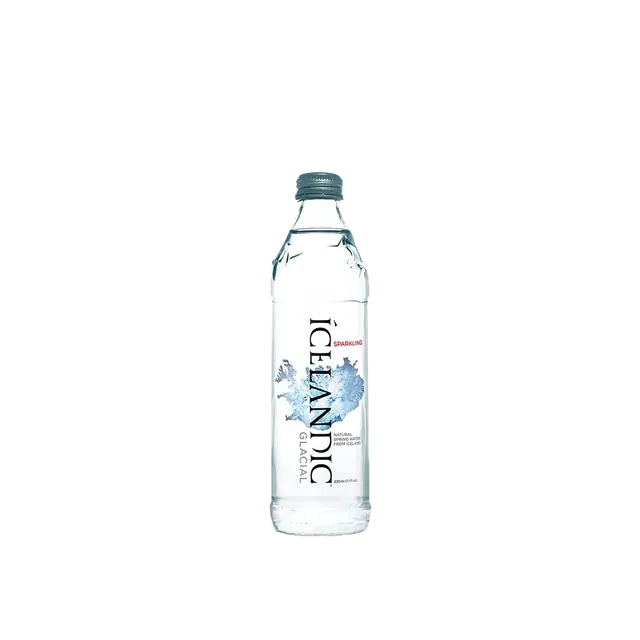
Icelandic Glacial Water Glass Bottle
Ranked #98 of 680 still waters.
- Lab Tested
- Yes
- Contaminants
- 29
- Minerals
- 16
- Microplastics
- Low
- pH
- 7.7
- TDS
- 68.9 ppm
- Fluoride
- 0 mg/L
- PFAS Tested
- Yes
Score breakdown
How this water earned its 71/100.
- Lab report indexed · Indexed45/45
- Contaminants · 18 Flagged0/50
- Water source · Mountain Spring25/25
- Mineral preservation · No Mineral Stripping17/17
- Packaging material · Glass (Certified No Plastic)22/22
- Cap material · Painted Aluminum Screw7/7
- PFAS testing · Tested5/5
Lab reports
Independent testing data backing this product's score.
- Laboratory
- Microbac Laboratories
- Report date
- Apr 8, 2026
- Sample date
- Mar 30, 2026
- Methodology
- EPA 150.1, SM 2510 B, EPA 180.1, SM 2340 B, SM 2320 B, EPA 524.2, EPA 200.7, EPA 200.8, EPA 300.0, SM 9223B, FDA CAM LCMSMS version C-010.02 Mod
Detected in lab report
- pH7.7 pH
- Total Dissolved Solids68.9 mg/L
- Turbidity0.15 NTU
- Hardness24.3 mg/L
- Expanded Hardness24.29 mg/L
- Grains per gallon1.42 Grains
- Alkalinity30 mg/L
- Langelier Saturation Index-1.6
- Sodium Adsorption Ratio0.97
- Barium0.00109 mg/L
- Bicarbonate36.38 mg/L
- Boron0.00739 mg/L
- Calcium6 mg/L
- Carbonate0.084 mg/L
- Chloride12.4 mg/L
- Chloride-to-Sulfate Mass Ratio3.75
- Fluoride0.043 mg/L
- Lithium0.00751 mg/L
- Magnesium2.26 mg/L
- Phosphorus0.0286 mg/L
- Potassium0.743 mg/L
- Silica17.4 mg/L
- Sodium11 mg/L
- Specific Conductivity116 umhos/cm
- Tin0.000344 mg/L
- Icelandic Glacial Water Quality Report July 2023
- Icelandic Glacial Water Quality Report April 2024
- Icelandic Glacial Sustainable Source Certificate
- Icelandic PFAS Report 2023
- Icelandic PFAS and Microplastics Report 2026
- Icelandic Glacial Water Quality Report March 2026
- Icelandic Microplastics Report 2026
- Icelandic Glacial Water Quality Report February 2026
Filtration & treatment
Contaminants
Microplastics
1.377Environmental persistence, contamination of food and water, potential ingestion toxicity, bioaccumulation, potential endocrine disruption
Silicone
0Potential for physical irritation in sensitive individuals, low risk of chemical leaching, minimal inhalation or ingestion toxicity at typical use
Acrylates
0Skin irritation, allergic contact dermatitis, respiratory irritation with inhalation exposure, potential toxicity if ingested
Acrylonitrile Butadiene Styrene (ABS)
0Potential skin irritation from monomer residues in manufacturing, emission of styrene during processing; low risk in cured product under normal use
Ethylene Vinyl Acetate
0Potential migration of chemical additives, possible exposure to vinyl acetate monomer, ultra-processed, not a food ingredient
Polyacrylic Acid
0Potential skin irritation, environmental impact
Polylactic Acid
0Synthetic Polymers
408Potential digestive irritation, lack of nutritional value, may cause allergenic or inflammatory responses, classified as ultra-processed
Polybutadiene
0Skin irritation, respiratory tract irritation upon inhalation of dust or fumes during processing, potential residual monomer contamination
Polycaprolactone
0Potential inhalation of combustion products if burnt, limited data on inhalation toxicity during candle burning, synthetic polymer concerns
Polycarbonate
0Potential release of bisphenol A (BPA) when heated or degraded, endocrine disruption, possible toxicity with chronic exposure
Polyether
0Potential for skin irritation or sensitization upon dermal contact, inhalation hazards possible during processing as dust or vapor, contamination risk depends on impurities
Polyethylene
26Persistence in environment, potential microplastic contamination
C20-40 Acid/Polyethylene
0None at typical topical use levels, low irritation potential
Polyethylene Terephthalate (PET)
2Potential antimony migration from catalyst, increased leaching with heat and prolonged storage, possible estrogenic activity signals in bottled water (inconsistent evidence), microplastic/nanoplastic shedding and exposure (health effects under investigation), potential taste/odor from acetaldehyde at high temperatures
Polyimide-1
0Potential dermal irritation or sensitization upon prolonged skin contact, inhalation risk primarily in industrial processing (powder or aerosol forms), limited ingestion exposure typical, no significant endocrine or contamination concerns documented
Polyisoprene
0Allergic reactions in sensitive individuals, potential exposure to processing chemicals
Polymethyl Methacrylate
0Not intended for ingestion, potential toxicity if ingested, chemical contamination, not GRAS for food use
Polyoxymethylene
0Risk of formaldehyde release upon degradation, potential irritation on skin or mucous membranes from formaldehyde exposure, low inherent toxicity when stable, inhalation hazard minimal under normal use
Polypropylene
0Potential inhalation of microplastics or degradation fumes during high heat processing, very low dermal and ingestion toxicity in typical use, environmental persistence
Polystyrene
0Potential styrene leaching, environmental pollution, not biodegradable
Polysulfone
0Potential skin irritation from dust or particles, inhalation toxicity risk if airborne particles generated during processing, no significant ingestion toxicity as it is not used as food additive
Polytetrafluoroethylene / PTFE
0 mg/LToxic fumes on overheating (polymer fume fever), respiratory irritation, environmental persistence
Polyurethane
0Potential irritant and sensitizer on skin contact, respiratory sensitization risk during aerosol or dust exposure, possible contamination with residual isocyanates during manufacturing
Polyvinyl Alcohol
0Mild skin irritation in sensitive individuals, low inhalation risk from dust
Polyvinyl Chloride
0Rubber
4Irritant/sensitizer (latex allergy), contamination with residual proteins causing allergic reactions
Polytetrafluoroethylene / PTFE
1 mg/LToxic fumes on overheating (polymer fume fever), respiratory irritation, environmental persistence
Polyurethane
1Potential irritant and sensitizer on skin contact, respiratory sensitization risk during aerosol or dust exposure, possible contamination with residual isocyanates during manufacturing
Minerals & nutrients
Chloride
12.4 mg/LSupports electrolyte balance, acid-base homeostasis, and proper nerve and muscle function
Sulfate
3.31 mg/LEffective cleansing and foaming agent in personal care products
Silica
17.4 mg/LPrevents clumping and improves texture in powdered products
Fluoride
0.043 mg/LPrevents dental caries, strengthens tooth enamel
Calcium
6 mg/LSupports bone health, muscle contraction, nerve signaling
Magnesium
2.26 mg/LSupports muscle and nerve function, contributes to bone health, involved in enzymatic reactions
Potassium
0.743 mg/LSupports electrolyte balance, helps regulate blood pressure, essential for nerve and muscle function
Sodium
11 mg/LEssential electrolyte, supports nerve transmission, aids fluid balance
Boron
0.00739 mg/LSupports bone health, hormone regulation, cognitive function, anti-inflammatory effects
Vanadium
0.0167 mg/LNone at typical consumer exposure levels
Lithium
0.00751 mg/LMood stabilization and prevention of manic/depressive episodes at therapeutic doses; neuroprotective effects including potential protection against Alzheimer's disease; may support cognitive function at low doses; preliminary evidence for aiding alcohol cessation
Strontium
0.00399 mg/LMay support bone density when used as specific salts under medical supervision
Bicarbonate
36.38Leavening agent in baking, acid neutralizer, pH buffer
Carbonate
0.084Enhances cleaning efficiency by softening water, boosts detergent performance, biodegradable
Phosphorus
0.0286Supports bone and teeth health, energy production, and cellular signaling
Tin
0.000344
How it compares
Sources
- Icelandic Glacial Water Quality Report July 2023
- Icelandic Glacial Water Quality Report April 2024
- Icelandic Glacial Sustainable Source Certificate
- Icelandic PFAS Report 2023
- Icelandic PFAS and Microplastics Report 2026
- Icelandic Glacial Water Quality Report March 2026
- Icelandic Microplastics Report 2026
- Icelandic Glacial Water Quality Report February 2026